The whole point is that we keep setting off
Fragment 1/5.
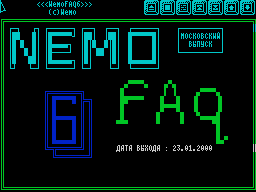
╔══════════════════════════════════════════════════════════════╗
║ ┌─┐   ┌┐ ┌──────┐ ┌──┐  ┌──┐  ┌──────┐    ┌──────────┐       ║
║ │██   █│ │█▀▀▀▀▀┘ │██│  │██│  █▀▀▀▀▀█│    │ MOSCOW   │       ║
║ │█ █  █│ │█▄▄▄▄┐  │█│█  █│█│  █     █│    │  ISSUE   │       ║
║ │█  █ █│ │█────┘  │█│ ██ │█│  █     █│    └──────────┘       ║
║ │█   ██│ │█▄▄▄▄▄┐ │█│    │█│  █▄▄▄▄▄█│                       ║
║ └┘   └─┘ └──────┘ └─┘    └─┘  └──────┘                       ║
║                                                              ║
║                              ▄▀▀▀▀▄    ▄▀▄                   ║
║          ╔════════╗         █          ▌ ▐     ▄▀▀▀▀▄        ║
║          ║ █▀▀▀▀█ ╠═╗       ██▀▀▀▀    █   █   ▐▌    ▐▌       ║
║          ║ █      ║ ║       █         █▀▀▀█   ▐▌    ▐▌       ║
║          ║ █▄▄▄▄▄ ║ ║       █        █     █   ▀▄▄▄▄█        ║
║          ║ █    █ ║ ║      ▀▀▀       ▀     ▀       ▀█        ║
║          ║ █    █ ║ ║                               █        ║
║          ║ █▄▄▄▄█ ║ ║                               █▄▀      ║
║          ╚═╦══════╝ ║      RELEASE DATE: 23.01.2000          ║
║            ╚════════╝                                        ║
║                                                              ║
║                                                              ║
║                                                              ║
╚══════════════════════════════════════════════════════════════╝
The whole point is that we keep setting off
on a journey that ended a second
before we managed to leave.........(c) Pelevin
Hello, esteemed users of the ZX-SPECTRUM computer!
The (c)Nemo company greets you once again and offers you a few
kilobytes of text to process with your gray matter.
° ° ° ° °
You can order the (c)Nemo company’s “open letters” by mail.
(A disk in IS-DOS format, containing lots of letters in text
format.) Address (c)Nemo:
198261, St. Petersburg, P.O. Box 213.
Don’t forget to enclose postage stamps worth 5 rubles.
Phone (c)Nemo at (812)159-5569 from 22:00 to 24:00 Moscow time.
At the address above, you can get the latest price list from
the (c)Nemo company and place an order.
╔══════════════════════════════════════════════════════════════╗
║       Contacting the (c)Nemo company in the Moscow region:   ║
║ orders for KAY motherboards, HDDs and various peripherals,   ║
║ correspondence accepted. Shipping by rail                   ║
║ via Moscow is possible.                                      ║
║ (095)333-1471 Boris Sharapov aka OPER                        ║
║     from 19:30 to 23:30 Moscow time                          ║
║ ZXNet   : Boris Sharapov (500:95/333)                        ║
║ INTERNET: zxnet@iname.com                                    ║
║         ( Subj:500:95/333 )                                  ║
║   117279, Moscow, General Antonov St., 2, Apt. 106           ║
╚══════════════════════════════════════════════════════════════╝

╔══════════════════════════════════════════════════════════════╗
║             OS is a big striped fly :-)                      ║
╚══════════════════════════════════════════════════════════════╝
Alexey Leontyev
My comments on NEMO’s musings about the “OS”
LAMER: “The OS is unreliable.”
NEMO: “In fact, the software reliability of the kernel itself is much higher than the reliability of the hardware and its architectural reliability...”
- I absolutely agree. I can only add that the most serious bugs in the iSDOS kernel were found around 1995. However, to be honest, I didn’t understand what Nemo meant by “architectural reliability.”
LAMER: “The OS is bad because it doesn’t support TRDOS.”
NEMO: “In fact, it’s impossible to create an OS that’s compatible with TRDOS. First of all, because the foundation of an OS is a record with a specific, inevitable and mandatory set of fields. Well, TRDOS doesn’t have these fields. In other words, a TRDOS record isn’t an OS record...”
- Nemo got a little carried away. In some sense, TRDOS is still a DOS—that is, a Disk Operating System, or rather, part of one: the File System. But it’s an extremely PRIMITIVE one. Let me remind those who’ve forgotten that it appeared solely as a replacement for the incredibly slow and no less primitive tape interface. Hence files with names of just 8 letters, no dates, version numbers, checksums or access permissions; files smaller than 64 kB; only contiguous files, with no more than 128 per disk, including deleted ones; no subdirectories; the need to defragment disks; a disk size of 640 kB; just 4 devices (ABCD); and a hard drive wired through the wrong end... Enough? Add any other delights like these if I’ve forgotten something. After all, since 1994 (when the assembler appeared in iSDOS), thank God, I’ve hardly had to work in TRDOS.
So making a proper, full-fledged FS (File System) “compatible with TRDOS” is like making an airplane that looks like a scooter. Only the name would be similar. Or it’s like translating Eugene Onegin into the language of Ellochka the Cannibal, with her vocabulary of 30 words, along the lines of:
“My uncle was a ho-ho kind of guy...”
How sad, girls! Besides, since we (or rather, you) have started talking about “compatibility,” you need to clearly define what you mean by compatibility. I’m sure the answer will be something like: “So you put in the disk, press a key, and EVERYTHING WORKS...”
And in general, compatibility is possible where there’s some sufficiently advanced interface that can be preserved by implementing it with other means. What does TRDOS have that anyone would want to preserve? Direct access by track and sector number?
By the way, lamers often bother me with similar, but more specific, requests, such as:
-
“So it copies all the files from a TRDOS disk into iSDOS (both code and BASIC), and they run right there...”
- Well, in principle, that’s probably possible (it’s called “TRDOS emulation in iSDOS”), but it’s a hassle—and what do you need it for? If that dumb program is happy with TRDOS, what does it need iSDOS for? Use that stuff in TRDOS; after all, KAY-1024 has a TRDOS RAM disk. It loads from the hard drive into RAM and auto-runs boot in 5 seconds, and runs from the RAM disk 15 times faster than from a floppy... And on the Scorpion there are other methods... Here, by the way, are 2 options for COMPATIBILITY: TRDOS emulation on a RAM disk or on a hard drive. Though, to be fair, iSDOS doesn’t deserve credit for this compatibility; it does, however, support this kind of compatibility.
-
“So there’d be a driver you could use to work with a TR-DOS disk just like in iSDOS...”
- That’s the reverse problem. In other words, “emulating iSDOS in TR-DOS.” And that’s the problem of translating Shakespeare into the language of the Yum-Yum tribe. It can be done, of course, but only with severe limitations. How, for example, do you imagine copying a file 2,500 blocks long to TR-DOS? Immediately hit the lamer with a three-digit error code? Or split the file into 10 chunks on the fly? In principle, it can be done. The problem is technical, after all. But it’ll be a hell of a headache... And the driver will come out at about 5 to 10 kilobytes... And how do you copy files back? That’s translating Shakespeare back from the language of the Yum-Yum tribe. All that’ll be left of Hamlet is a pile of gnawed bones, though Yorick’s skull might survive... Anyway, you’ll give up on the idea yourselves.
However, don’t think there’s no TR-DOS compatibility in iSDOS at all. There are the long-familiar file-copying programs
from_trdandto_trdos, which let you copy files both ways; and, finally, there are a number of new programs that save a TR-DOS disk as a file, as well as support for a TR-DOS RAM disk. Loading such a file from the hard drive takes 5 seconds.
LAMER: “You don’t need an OS.”
-
To be honest, I don’t even feel much like arguing about this. It reminds me of the anarchists’ slogan: the state is unnecessary. But show me one example! As society develops, it inevitably becomes more structured and complex; people create various governing bodies and delegate various functions to them. Computer systems are no different: as they grow more complex, they’re simply forced to acquire operating systems, so that every program doesn’t have to be adapted to the ever-growing variety of hardware, and application programmers don’t have to deal with system-level issues.
The OS sits between the program and the hardware, making the hardware “transparent” to the program. It should make absolutely no difference to a program what it runs on: an electronic disk, a hard drive, or a floppy. It shouldn’t matter which computer model is being used, or how the hard drive or expanded RAM is accessed. Drivers should take care of these things. And that’s already part of the OS. It’s not a program’s job to access disk blocks directly (I’m not even talking about tracks and sectors!) when working with a file. That kind of mapping is the job of the File System. There’s another part of the OS for you. Why should a programmer poll the keyboard ports when a driver can do it better? I’ve seen so many games with absolutely terrible keyboard handling! Games do have their own quirks, of course — two or three keys pressed at the same time. That calls for a special driver. But who says you can’t write one for iSDOS?
LAMER: “The OS has little free memory, a limited feature set, and low performance.”
— About that “limited feature set”… Does TR-DOS have more? And which functions, exactly, are you missing?
— And why do you need so much memory? First of all, let’s not forget that all programs for TR-DOS consist a third—or even half—of useful things like a keyboard driver (up to a kilobyte), a character generator (another 2K, sometimes more than one), built-in routines for printing a TR-DOS directory (several kilobytes), and so on and so forth. A program like that is like an astronaut on the Moon in a spacesuit, carrying an oxygen supply, an electric heating system, and all sorts of other stuff in case none of it is available on site. Working under TR-DOS (that is, without an OS) is a struggle for survival: one person alone in the wilderness, far from civilization. Carry everything with you! Working under an OS, on the other hand, is like living in a modern metropolis, with all its services and amenities—transport, communications, sewage and running water, for starters! Living light. All you need is a pager and a plastic card…
— And if you still don’t have enough memory—that is, you need tens of kilobytes for buffers—who’s stopping you from using the banks in a 128K machine? iSDOS doesn’t need them at all, by the way, unless you’re using an electronic-disk driver on machines with relatively little memory (128/256 kB). But then you can’t have your cake and eat it too… The choice is yours. Programs that do this have been around for ages, incidentally. For example, Misha Kondratyev’s zip-file unpacker isunzjr.com, which works with both the old iSDOS Classic and the latest “chic” version (That’s what “ZX-128 compatibility” means, by the way, and iSDOS Chic provides it!). All the copy programs, without exception (about seven of them), do it too. So do both graphics editors (unfortunately, they’re both buggy, but that’s not iSDOS’s fault, of course).
Another way to write programs of any size is to load overlays. The text editor, the text-printing program, and Picasso have all been working this way for a long time. On an electronic disk or hard drive, loading is practically instantaneous. So using extra memory is not all that crucial, except in certain specific cases. Besides, one way or another, all 128K programs are a kind of overlay too, since the addressable memory is always only 64K. In short, all you need is the desire and the know-how. There are plenty of ways to do it. Though it’s easier to whine and complain about not having enough memory—or something else—than to write programs…
— By the way, I’m beginning to be assailed by vague and gloomy suspicions… What! Could it be that almost nobody uses the latest iSDOS Chic system, with its doubled USER memory?! I’m afraid that’s close to the truth…
Recently I had a conversation with some lamer who said that some Ruiner (as far as I understood, he’s some sort of programmer, or hacker, or whatever, on the Scorpion. By the way, his floppy drivers hang under iSDOS, and not just on my machine…) had declared that iSDOS Chic “must die.” In our words: it should croak. I didn’t even bother pressing the lamer for an explanation of this categorical verdict. It’s impossible to argue with lamers. Especially fanatics. I should point out, though, that iSDOS Chic inspires understandable hatred and envy among Scorpion owners because it proved to be beyond their capabilities.
…Scorpion. The Scorp is just too badly put together for iSDOS Chic. Specifically, the Scorpion computer cannot (unlike the KAY-256/1024) do all of the following at once:
- Ensure compatibility with the ZX-128,
- Open RAM at address 0, and
- Have access to the hard drive.
One of these things won’t work. Any one on its own works, any two together work, but all three at once—no way! What’s the problem? The Scorpion’s shadow monitor gets in the way, like it does for a bad dancer. It’s sitting in the wrong bank, so to speak. By the way, don’t think that iSDOS Chic is badly designed. It’s just that, as an OS, it makes higher demands on computers in terms of compatibility. The KAY meets them, and the Scorpion doesn’t. That’s why Scorpion owners are still stuck with the obsolete iSDOS Classic, supported since 1995 exclusively for obsolete 48K and 128K machines, various obscure mutants like the ATM, and badly designed products like the Scorpion. Hence the claims that iSDOS doesn’t have enough memory. But iSDOS Chic has twice as much, and it still doesn’t help! So, the grass is greener elsewhere! And that’s where “must die” comes from. (I hope this slogan of lamers and Scorpion owners everywhere won’t be applied to programmers and manufacturers of proper computers :-). In my opinion, instead of struggling and shouting “must die,” they’d be better off reprogramming the shadow monitor ROM so it uses banks 10 and 13 instead of bank 8. That would only improve compatibility.
- As for the low operating speed under the OS: I’d like a specific example. If you mean assembling a large number of files, I can agree on just one point. Yes, when assembling ALL the files for the first time, as.com in iSDOS will be slower than an assembler written for TR-DOS for the 128K Sinclair. But who ever stopped after compiling their source code just once?! What about bugs? Optimization? Adding features? In iSDOS, when you run the assembler again, only the CHANGED files are assembled (provided, of course, that you don’t delete the object modules). And that can even be faster. Secondly, nowadays working in iSDOS means working on a RAM disk or a hard drive, which is also 10–15 times faster than a floppy. Besides, I’ve never met programmers who spend anywhere near as much time compiling as they do typing in a program, thinking it through, and debugging it.
Or take another example. Unpacking Kondratyev’s ZIP files on a RAM disk: 1.8 KB of ZIP per second. Is it faster in TR-DOS?
Or, say, scrolling is supposedly slower in the viewer. But it’s still faster than you can read the text. How much faster do you need it to be?! And if you don’t like my viewer, why don’t you write your own for iSDOS? Nothing prevents you. Quite the opposite. The system has been documented for ages.
A. Leontyev
╔══════════════════════════════════════════════════════════════╗
║                           ° ° °                              ║
╚══════════════════════════════════════════════════════════════╝
Share your thoughts about the article